
How Does Fog Form?
Fog is a cloud touching the ground. It forms when air near the surface becomes saturated, either by cooling to its dew point, as in radiation fog on clear, calm nights or advection fog when moist air crosses a cold surface, or by adding moisture, as in steam fog when cold air moves over warmer water.
Fog is the quiet hazard. No thunder, no wind, nothing dramatic, and yet it causes deadly chain-reaction pileups on highways. Spoiler: fog is just a cloud that got lazy and sat down on the ground. Here is how it forms, why it burns off, and what to do when you are driving into a wall of white.
Key Takeaways
- Fog is a cloud whose base touches the ground, with visibility below 1 kilometer.
- Air saturates either by cooling to its dew point or by gaining moisture.
- Radiation fog forms on clear, calm nights and pools in valleys.
- Advection fog forms when moist air moves over a colder surface and can last for days.
- Fog that lifts becomes stratus, and stratus that lowers becomes fog.
Fog is a cloud whose base touches the ground. By international definition, it is fog when visibility drops below 1 kilometer (about five-eighths of a mile). When visibility is reduced by water droplets but remains 1 kilometer or more, it is called mist. Fog is one of the deadliest weather hazards for transportation, responsible for chain-reaction highway pileups and aviation delays, even though it is quiet and calm.
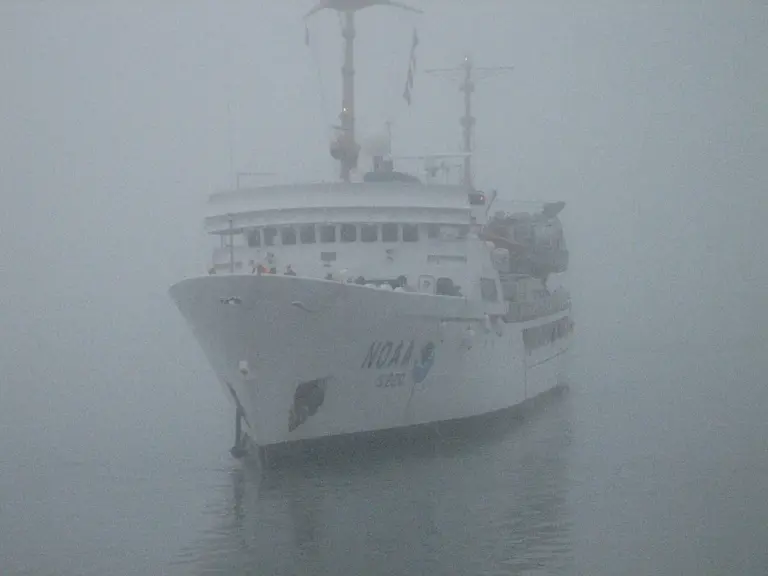
Like any cloud, fog forms when air becomes saturated, which happens in one of two ways: cooling the air to its Dew Point, or adding enough moisture to raise the dew point to the air temperature. Each type of fog is named for how that happens.
What Causes Morning Fog?
Radiation Fog is the classic valley fog of autumn mornings. It forms on clear, calm nights:
- With no clouds overhead, the ground radiates heat to space efficiently and cools quickly.
- The air in contact with the ground cools too, forming a Temperature Inversion, a shallow layer where temperature increases with height.
- Once the air near the surface cools to its dew point, droplets form.
The ideal recipe is long nights, clear skies, moist ground (such as after rain), and light winds of about 2 to 5 mph. Perfectly calm air may give only dew or frost, while stronger wind mixes in drier air from above and prevents fog. Because cold air drains downhill, radiation fog pools in valleys and low spots.
Radiation fog usually "burns off" in the morning. Sunlight actually heats the ground beneath the fog, and that warming mixes the layer from the bottom up, so fog often lifts into a low stratus deck before breaking into cumulus.
What Is Advection Fog?
Advection Fog forms when warm, moist air moves horizontally over a colder surface and is chilled from below. Unlike radiation fog, it can form in windy conditions and can last for days.
- The summer fogs of the California coast form as moist Pacific air crosses the cold ocean current offshore, then drifts inland through gaps like the Golden Gate.
- The Grand Banks off Newfoundland are among the foggiest places on Earth, where warm Gulf Stream air meets the cold Labrador Current.
- In winter and spring, mild humid air flowing north over snow-covered ground can produce thick advection fog while it melts the snow.
Upslope Fog
Upslope fog forms when moist air is pushed up a gradual slope and cools by expansion, the same adiabatic cooling that creates most clouds. On the Great Plains, easterly winds carrying moist air westward toward the Rocky Mountains can create widespread upslope fog and low stratus that covers an area of many thousands of square miles. It can last as long as the upslope wind continues.
What Is Steam Fog?
Some fogs form by adding moisture instead of cooling.
- Steam fog (sea smoke) appears when very cold air moves over much warmer water. Water evaporates into the cold air, which quickly saturates, and wisps of fog rise from the surface like steam from a hot bath. It is common over lakes on autumn mornings and over the Great Lakes and Arctic seas in winter.
- Frontal (precipitation) fog forms when warm rain falls through cooler air near the ground, often ahead of a Warm Front. Evaporating raindrops raise the dew point until the air saturates.
What Is Freezing Fog?
When fog droplets are colder than 0 C, they remain supercooled and freeze on contact with surfaces. This freezing fog coats trees, fences, and roads with feathery rime ice and creates dangerous black ice on highways.
What Is the Difference Between Fog and Low Clouds?
Fog and stratus are close cousins. If surface heating lifts the fog base off the ground, it becomes stratus. If stratus lowers to the surface, it becomes fog. Pilots care deeply about this boundary: aviation categories depend on both visibility and ceiling (the height of the lowest broken or overcast cloud layer). Low instrument conditions, with ceilings below 500 feet or visibility below 1 mile, restrict many airports.
Real-World Example: Florida Winter Fog
In Florida, fog is most common in the cooler months. After a cold front passes and the humidity creeps back, a clear, calm night lets the ground cool until the air near it reaches its dew point. By sunrise, low spots and highways near wetlands can drop to near-zero visibility while it looks fine a mile away. The NWS issues Dense Fog Advisories for these mornings. If one is up for your area, leave early, slow down and use low beams.
Common Mistakes
- Myth: Fog burns off because the sun heats the fog. Fact: Sunlight mostly heats the ground beneath the fog, and that warming mixes the layer from the bottom up until it lifts into stratus and breaks apart.
- Myth: High beams help you see in fog. Fact: High beams reflect off the droplets and make visibility worse. Use low beams and fog lights.
- Myth: Fog only forms when the wind is dead calm. Fact: Radiation fog likes light winds of a few miles per hour, and advection fog can form and persist in breezy conditions.
Go Deeper: The Inversion That Holds Fog in Place
Radiation fog depends on a nocturnal surface-based temperature inversion. Under clear skies, longwave radiation from the ground escapes to space, the surface cools, and the air in contact with it cools by conduction. Light winds spread that cooling through a shallow layer through gentle turbulent mixing. With no wind, cooling stays confined to a very thin layer and you get dew or frost; with too much wind, warmer, drier air mixes down from above and prevents saturation.
Once fog forms, its top radiates efficiently, which can deepen the fog overnight. After sunrise, solar heating at the ground creates a superadiabatic layer that mixes upward and erodes the fog from below. On satellite at night, forecasters compare two infrared channels because fog droplets emit differently at those wavelengths, even when the fog top and the nearby clear ground share nearly the same temperature.
Check Yourself
No grades, no sign-in. Pick an answer and see how you did. The app keeps score for you and tracks your progress.
1 What visibility threshold separates fog from mist?
Show The Answer
1 kilometer Fog is defined as droplets reducing visibility below 1 kilometer; mist is the same thing with visibility of 1 kilometer or more.
2 Which conditions favor radiation fog?
Show The Answer
Clear skies, light winds, moist ground, and long nights Clear, calm nights let the ground cool rapidly and chill the air near it to its dew point.
3 The summer fog along the California coast is mainly:
Show The Answer
Advection fog Moist Pacific air is chilled from below as it crosses cold coastal ocean water, then drifts inland.
4 Steam fog forms by:
Show The Answer
Adding moisture as cold air moves over much warmer water Evaporation from the warm water saturates the cold air above, producing rising wisps of fog.
Questions People Ask
What is the difference between fog and mist?
Both are tiny water droplets near the ground. It is called fog when visibility is below 1 kilometer, about five-eighths of a mile, and mist when visibility is 1 kilometer or more.
What should you do when driving in dense fog?
Slow down, use low-beam headlights, and leave extra following distance. If you cannot see, pull completely off the road into a safe spot, turn off your driving lights, and turn on hazard flashers once you are safely off the roadway.
Why is fog common in valleys?
Cold air is dense and drains downhill at night, so the coolest, most saturated air pools in valleys and low spots where radiation fog forms first.
What is freezing fog?
Freezing fog is made of supercooled droplets below 0 C that freeze on contact with surfaces, coating trees and roads with rime and creating black ice.
How can you tell if fog will form tonight?
Watch the gap between temperature and dew point. On a clear, calm night, if they are within a degree or two of each other, fog is likely by morning.
Learn More From The Experts
- NWS Louisville: How Fog Forms NOAA / NWS
- NWS Safety: Driving in Fog NOAA / NWS
Fog looks gentle, but it is not. Slow down, low beams on, and get completely off the road if you cannot see. — Jen
