
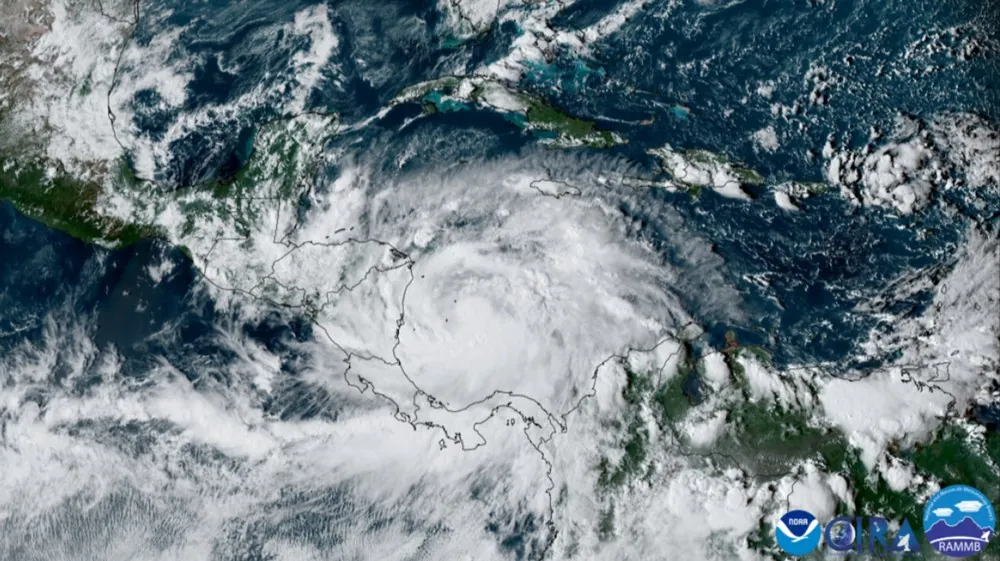
How Do Hurricanes Work?
Hurricanes are tropical cyclones powered by warm ocean water. Thunderstorms around a disturbance release heat, pressure falls, and winds spiral inward. At 74 mph sustained winds a storm becomes a hurricane, rated 1 to 5 on the Saffir-Simpson scale by wind alone. Storm surge and rain flooding cause most hurricane deaths.
Hurricane season on the Space Coast is part of life, like sunscreen and afternoon thunder. This unit follows a hurricane from a ripple off Africa to landfall. You will learn what the category really tells you, what the cone does not, and why water is the hazard that matters most. Safety decisions always come from the NHC and your local NWS office.
What You’ll Learn
- The ingredients a hurricane needs, from 80 F water to low wind shear
- How tropical waves grow into depressions, storms and hurricanes
- The eye, eyewall and rainbands of a mature hurricane
- What each Saffir-Simpson category means, and what it leaves out
- How the NHC forecast cone is built and why the center leaves it about one-third of the time
- Storm surge versus storm tide, and why the right-front quadrant is worst
- Why inland flooding and rainband tornadoes surprise people
Lessons In This Unit
- 10.1How Hurricanes FormHurricanes form over ocean water of about 80 F (26.5 C) or warmer. A tropical wave or other disturbance gathers thunderstorms, low wind shear lets them stack up, and the...Intermediate · 8 min
- 10.2The Saffir-Simpson Scale And The ConeHurricane categories come from the Saffir-Simpson Hurricane Wind Scale, which rates storms 1 to 5 by maximum sustained wind only. Category 1 is 74 to 95 mph and Category 5 is...Beginner · 8 min
- 10.3Storm Surge, Inland Flooding And TornadoesStorm surge is an abnormal rise of the ocean pushed ashore by a storm, above the normal tide. It is caused mostly by strong onshore winds piling water against the coast, with a...Intermediate · 9 min
Questions People Ask
What is the difference between a hurricane and a tropical storm?
Wind speed. A tropical storm has sustained winds of 39 to 73 mph; a hurricane has 74 mph or more.
What is the deadliest part of a hurricane?
Water. Storm surge and freshwater flooding from rain cause the large majority of US tropical cyclone deaths.
Does the hurricane cone show the size of the storm?
No. It shows the likely track of the center, built from past forecast errors. Impacts often reach far outside it.
Make your plan in May, not the night before landfall. Jen — Jen
