
How Does the Greenhouse Effect Work?
Sunlight passes through the atmosphere and warms the surface, which then emits infrared energy. Greenhouse gases such as water vapor, carbon dioxide and methane absorb much of that infrared and re-emit it in all directions, including back down. That keeps Earth's average surface near 15 C instead of about -18 C, a difference of about 33 C.
Two big ideas live in this lesson. One keeps Earth warm enough for liquid water. The other is the reason weather exists at all. Neither involves an actual greenhouse, which is my favorite bit of naming chaos in science.
Key Takeaways
- Without the greenhouse effect Earth would average about -18 C; with it, about +15 C.
- Water vapor is the largest greenhouse contributor, and it amplifies changes because its amount depends on temperature.
- Low, thick clouds cool the planet on balance; high, thin cirrus warm it.
- The tropics have an energy surplus and the poles a deficit, with the crossover near 35 to 40 degrees latitude.
- Moving heat poleward through oceans, winds and storms is what we experience as weather.
Two big ideas explain why Earth is livable and why it has weather at all. The greenhouse effect keeps the planet warm enough for liquid water. Uneven heating between the tropics and the poles sets the atmosphere in motion. Together, they are the foundation for everything that follows in this course.
A Planet Without A Greenhouse
Using the energy budget numbers from the previous lesson, you can calculate how warm Earth would be if it simply absorbed sunlight and radiated infrared straight to space. The answer is about -18 C (0 F). Earth's actual average surface temperature is about +15 C (59 F). The 33 C difference is the Greenhouse Effect.
How Does the Greenhouse Effect Work?
Sunlight is shortwave radiation, and the atmosphere is mostly transparent to it. The surface absorbs sunlight and emits longwave infrared. Certain gases absorb that infrared very efficiently:
- Water vapor (H2O): The largest contributor by far, but its amount is controlled by temperature, so it acts as an amplifier.
- Carbon dioxide (CO2): A long-lived gas that absorbs strongly near 15 micrometers.
- Methane (CH4), nitrous oxide (N2O) and ozone (O3): Smaller amounts, but powerful per molecule.
- Clouds: Not a gas, but cloud droplets absorb and emit infrared very effectively.
A Greenhouse Gas absorbs outgoing longwave radiation and re-emits it in all directions. Part goes back down, warming the surface further. The layer that finally radiates energy to space sits high in the troposphere, where it is cold. To send enough energy to space to balance incoming sunlight, the whole troposphere and surface must be warmer than they otherwise would be.
Do Clouds Warm or Cool the Earth?
Clouds reflect sunlight (cooling) and trap infrared (warming). Which effect wins depends on the cloud:
- Low, thick clouds like stratus and stratocumulus reflect a lot of sunlight and have warm tops that emit plenty of infrared to space. They cool the planet on balance.
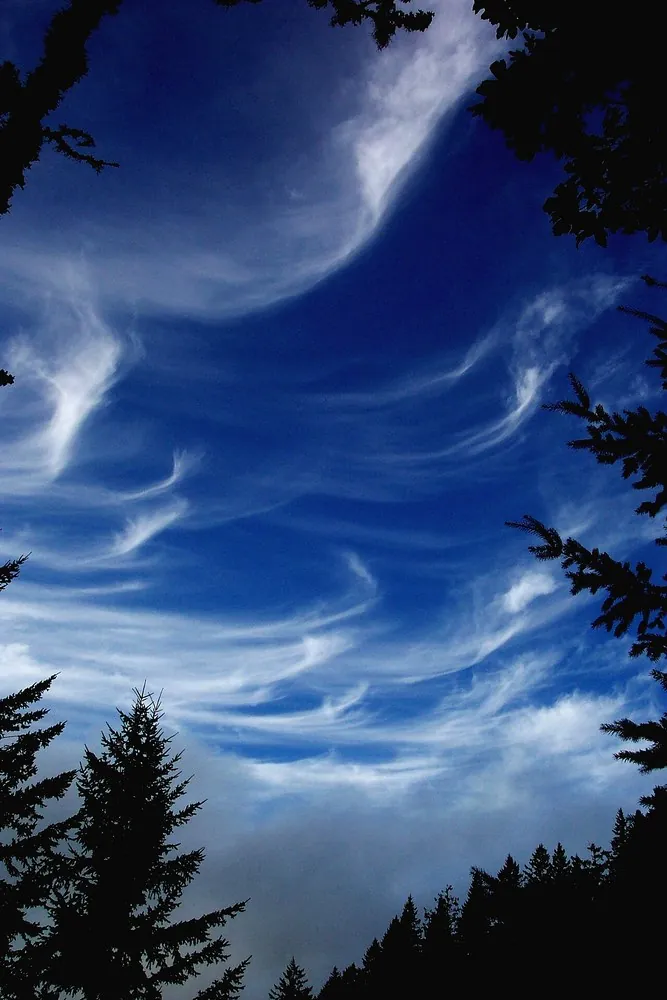
- High, thin clouds like cirrus let most sunlight through but have very cold tops that emit little to space. They warm the planet on balance.
What Causes Uneven Heating of the Earth?
Here is the key insight. The planet as a whole is in Radiative Balance, but individual latitudes are not.
- Near the equator, the sun is high all year. The tropics absorb more solar energy than they radiate away as infrared, a steady surplus.
- Near the poles, the sun is low or absent for months, and bright snow and ice reflect much of what arrives. The polar regions radiate far more than they absorb, a steady deficit.
- The crossover sits near 35-40 degrees latitude, roughly the latitude of the central United States.
If nothing moved energy around, the tropics would get steadily hotter and the poles steadily colder. They do not, because the atmosphere and oceans carry heat poleward. This Heat Transport is continuous and enormous, on the order of 5 petawatts (5 million billion watts) at its peak in the midlatitudes, hundreds of times humanity's entire energy use.
How The Heat Gets Moved
- Ocean currents like the Gulf Stream and Kuroshio carry warm water poleward. The oceans do most of the transport in the tropics.
- Atmospheric circulation takes over in the midlatitudes. Rising air in the tropics, the Hadley Cell, exports heat toward the subtropics.
- Midlatitude storms are the main heat movers between about 30 and 60 degrees latitude. Every low pressure system that sweeps warm air northward ahead of it and cold air southward behind it is doing its share of the job.
- Latent heat carries energy hidden in water vapor, released far from where it evaporated. Hurricanes move vast amounts of tropical heat poleward.
How Does Uneven Heating Create Wind?
Uneven heating creates temperature contrasts, and temperature contrasts create pressure differences, because cold air is denser and its pressure falls off faster with height. Pressure differences push air, making wind. The sharper the contrast, the stronger the upper-level winds, which is why the Jet Stream is fastest in winter, when the equator-to-pole temperature gradient is greatest.
Where the gradient concentrates into narrow zones, it forms fronts, and the atmosphere develops swirling storms to release the stored energy. A strong winter storm is, in a sense, the atmosphere converting a temperature contrast into motion, rain and snow.
Real-World Example: A Winter Storm as a Heat Mover
A big winter low sweeping across the country pulls warm, moist air north ahead of it and drags cold air south behind it. That swap is the storm doing its share of the poleward heat delivery job.
The March 1993 Superstorm is a well-known example of a sharp winter temperature contrast turned into a massive storm, with heavy snow from the South to New England. Strong contrast, strong jet stream, strong storm.
Common Mistakes
- Myth: The greenhouse effect works like glass in a greenhouse. Fact: A glass greenhouse stays warm mostly by stopping warm air from mixing away. The atmospheric effect is radiative: gases absorb and re-emit infrared.
- Myth: The greenhouse effect is entirely bad. Fact: The natural greenhouse effect keeps Earth about 33 C warmer than it would otherwise be, warm enough for liquid water. Rising greenhouse gases are strengthening it.
- Myth: Carbon dioxide is the biggest natural greenhouse gas. Fact: Water vapor contributes the most, but its amount is controlled by temperature, so it amplifies changes driven by longer-lived gases like carbon dioxide.
Go Deeper: Emission Height and Poleward Heat Transport
Most of the infrared that finally escapes to space is emitted from high in the troposphere, where it is cold, and colder emitters radiate less. To send enough energy to space to balance absorbed sunlight, the surface and troposphere below must be warmer than they would be otherwise. Adding greenhouse gases raises that effective emitting level, strengthening the effect.
The latitude imbalance requires poleward heat transport that peaks around 5 petawatts in the midlatitudes. Oceans carry most of it in the tropics, the Hadley cell exports heat toward the subtropics, and midlatitude storms take over between about 30 and 60 degrees. A sharper equator-to-pole contrast means a stronger jet stream, which is why both peak in winter.
Check Yourself
No grades, no sign-in. Pick an answer and see how you did. The app keeps score for you and tracks your progress.
1 About how much warmer does the greenhouse effect make Earth's average surface?
Show The Answer
About 33 C Without it Earth would average about -18 C; with it the average is about +15 C.
2 Which greenhouse gas contributes the most to the natural greenhouse effect?
Show The Answer
Water vapor Water vapor is the largest contributor, but its amount is controlled by temperature, amplifying other changes.
3 Why do the tropics have an energy surplus?
Show The Answer
They absorb more sunlight than they radiate away as infrared The high sun delivers more energy than the tropics lose by longwave emission, so heat must be exported.
4 What carries most of the poleward heat between about 30 and 60 degrees latitude?
Show The Answer
Midlatitude storm systems Low pressure systems swap warm and cold air masses, moving heat poleward.
5 When is the jet stream usually strongest?
Show The Answer
Winter The equator-to-pole temperature contrast is greatest in winter, which strengthens upper-level winds.
Questions People Ask
What are the main greenhouse gases?
Water vapor, carbon dioxide, methane, nitrous oxide and ozone. Clouds also absorb and emit infrared effectively.
How warm would Earth be without the greenhouse effect?
About -18 C (0 F) on average, compared with the actual average of about +15 C (59 F).
Why is the jet stream stronger in winter?
The temperature contrast between the equator and the poles is greatest in winter, and a sharper contrast produces stronger upper-level winds.
What drives the weather?
Uneven heating. The tropics gain more energy than they lose and the poles lose more than they gain, so the atmosphere and oceans constantly move heat poleward.
Learn More From The Experts
The tropics have too much heat, the poles not enough, and weather is the delivery service. It never takes a day off. — Jen
