
How Do You Stay Safe From Lightning?
Go indoors as soon as you hear thunder, because you are close enough to be struck. Shelter in a building with plumbing and wiring or a hard-topped metal vehicle with windows closed. Stay inside until 30 minutes after the last thunder. Indoors, avoid showers, baths, corded phones, plugged-in electronics and windows.
This is the lesson I care about most. I am a SKYWARN storm spotter on Florida's Space Coast, in one of the most lightning-active parts of the country, and the rules here are simple on purpose. No jokes in this one. Just the things that keep you alive.
Key Takeaways
- If you can hear thunder, you are close enough to be struck. Go indoors.
- Wait 30 minutes after the last thunder before going back outside.
- Safe shelter means a building with plumbing and wiring or a hard-topped metal vehicle.
- Indoors, stay off corded phones and out of showers, baths and sinks.
- Lightning victims carry no charge. Call 911 and start CPR if needed.
Lightning kills on average about 20 people a year in the United States and injures hundreds more, many with lifelong nerve damage, memory problems, and chronic pain. Deaths have fallen sharply, from well over 100 a year in the mid-twentieth century, because more people work indoors and because public education works. The single most important message: no place outdoors is safe when a thunderstorm is nearby.
How Close Does Lightning Have to Be to Be Dangerous?
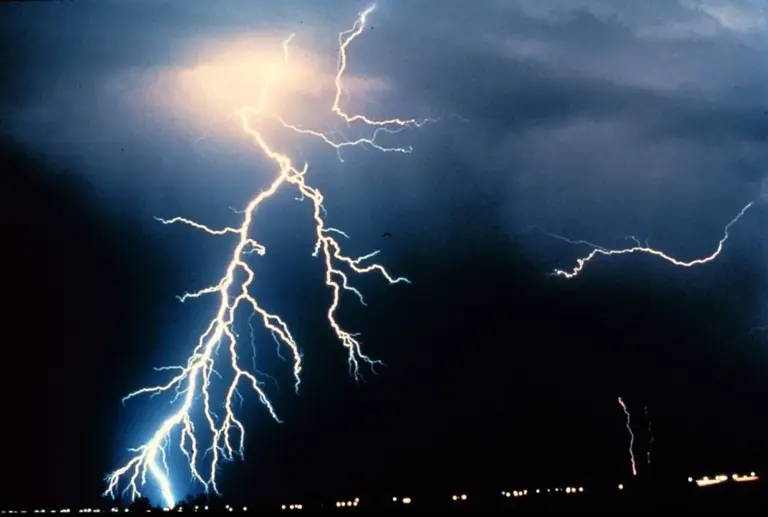
If you can hear Thunder, you are close enough to be struck. Lightning can reach 10 miles or more from the storm that produced it, sometimes striking out of clear blue sky ahead of the rain. These "bolts from the blue" are one reason victims are often caught off guard.
The 30-minute rule exists because the back side of a storm can still produce strikes as it moves away, and a significant share of lightning deaths happen before the rain starts or after it ends.
Is the 30-30 Lightning Rule Still Used?
For years people were taught the "30-30 rule": seek shelter if the time between flash and thunder is 30 seconds or less (about 6 miles). The National Weather Service no longer promotes the first half of that rule. Counting requires you to see the flash and match it to the right thunder, which is hard with multiple strikes, and it encourages people to wait until a storm is already close. The simpler rule is better: if you can hear thunder at all, go indoors. The second "30," waiting 30 minutes after the last thunder, is still recommended.
Where Is Safe During a Lightning Storm?
- A substantial building: one with plumbing and electrical wiring, such as a home, school, office, or store. The wiring and pipes carry current into the ground around you if the building is struck.
- A hard-topped metal vehicle with the windows closed: a car, truck, or bus. The metal body conducts current around the occupants and into the ground. The tires offer no protection; the metal shell does the work.
These are not safe:
- Picnic shelters, dugouts, tents, bus stops, porches, and open garages.
- Convertibles, golf carts, motorcycles, and bicycles.
- Under trees of any size.
Is It Safe to Shower During a Thunderstorm?
Lightning can still hurt you inside a building through the wiring and plumbing:
- Avoid corded phones and plugged-in electronics such as desktop computers and gaming consoles. Cell phones and cordless phones are safe to use.
- Stay out of the shower and bath, and avoid washing dishes.
- Stay away from windows, doors, and porches.
- Do not lie on concrete floors or lean on concrete walls, which may contain metal reinforcement.
How Does Lightning Hurt People?
Only a small fraction of victims receive a direct strike. Most are hurt in other ways:
- Ground Current: current spreading through the ground from a nearby strike. It causes the most injuries and kills many livestock.
- Side Flash: current jumps from a struck tree or object to a person nearby.
- Conduction: current travels through wires, fences, or metal pipes to someone touching them. It is the main cause of indoor lightning injuries.
- Upward streamers: the person is part of a streamer that did not connect to the main channel but still carried current.
- Direct strike: the person is the path of the Cloud-To-Ground Lightning flash. It is the least common but most often fatal.
Myths
- "Lightning never strikes the same place twice." It often does. The Empire State Building is struck about 20 to 25 times a year.
- "Rubber tires protect you in a car." It is the metal body, not the tires.
- "If it is not raining, you are safe." Lightning can strike 10 miles or more from the rain.
- "Lightning victims are electrified and should not be touched." The human body does not store charge. Touch them and help immediately.
- "Crouching makes you safe." The old "lightning crouch" is a last resort that only slightly reduces risk. There is no safe place outdoors.
What to Do If You Are Caught Outside in a Lightning Storm
If you truly cannot reach shelter, lower your risk (it will never be zero):
- Get off elevated areas such as hills, ridges, and peaks.
- Never lie flat on the ground; that increases exposure to ground current.
- Never shelter under an isolated tree.
- Stay away from water, wet items, and metal objects such as fences and power lines.
- If in a group, spread out so one strike does not injure everyone.
Outdoor activities such as fishing, camping, boating, beach trips, and sports account for a large share of deaths. Check the forecast before you go, and plan how you will reach shelter.
Try It Here
Real-World Example: A Florida Beach Afternoon
Florida summer days often start sunny at the beach, then storms build inland in the afternoon. The first thunder can come while the sky overhead still looks fine. That is exactly when people get hurt, because lightning can strike 10 miles or more from the storm, ahead of the rain.
The safe plan is simple. Check the forecast before you go. Know where your car or a real building is. When you hear the first rumble, pack up and go, without waiting for rain. Beach pavilions, umbrellas and picnic shelters do not count. Then stay inside until 30 minutes after the last thunder. The app can show you lightning and NWS warnings, but you do not need a warning to be in danger. Any thunderstorm makes lightning.
Common Mistakes
- Myth: Rubber tires protect you in a car. Fact: The metal body carries the current around you and into the ground. The tires do not provide meaningful protection, which is why convertibles and golf carts are not safe.
- Myth: If it is not raining, you are safe. Fact: Lightning can strike 10 miles or more from the rain, and many deaths happen before the rain starts or after it ends.
- Myth: Lightning victims are electrified and should not be touched. Fact: The human body does not store charge. Call 911 and help right away, including CPR and an AED if needed, while watching your own safety.
- Myth: Lightning never strikes the same place twice. Fact: It often does. The Empire State Building is struck about 20 to 25 times a year.
Go Deeper: Why Buildings and Metal Vehicles Protect You
A substantial building protects you because its wiring, plumbing and any lightning protection system give current lower-resistance paths around the occupants and into the ground. That same plumbing and wiring is why contact with water, corded phones and plugged-in electronics is a risk indoors: conduction through building systems is the main cause of indoor lightning injuries.
A hard-topped metal vehicle works as a partial Faraday cage. Current flows through the outer metal shell and arcs to the ground, so occupants should keep windows closed and avoid touching metal parts connected to the frame. Outdoors, ground current spreads radially from the strike point, and the voltage difference across a person's body or a four-legged animal's stance drives current through them. That is why ground current injures so many people and kills livestock.
Check Yourself
No grades, no sign-in. Pick an answer and see how you did. The app keeps score for you and tracks your progress.
1 What is the current NWS guidance for when to seek shelter?
Show The Answer
As soon as you hear thunder If you can hear thunder, you are close enough to be struck.
2 How long should you wait after the last thunder before going back outside?
Show The Answer
30 minutes Strikes can continue from the back edge of a departing storm, so wait 30 minutes.
3 Why is a hard-topped car relatively safe during lightning?
Show The Answer
Its metal body conducts current around the occupants to the ground The metal shell carries current around you; tires provide no meaningful protection.
4 What causes the most lightning injuries?
Show The Answer
Ground current from nearby strikes Current spreading through the ground from a nearby strike injures more people than any other mechanism.
Questions People Ask
Is it safe to shower during a thunderstorm?
No. Lightning can travel through plumbing, so stay out of the shower and bath and avoid washing dishes until the storm has passed.
Can I use my phone during a thunderstorm?
Cell phones and cordless phones are safe to use. Avoid corded phones and plugged-in electronics, which connect to the building's wiring.
How long after thunder is it safe to go outside?
Wait 30 minutes after the last thunder you hear. The back side of a departing storm can still produce strikes.
Are you safe in a car during lightning?
A hard-topped metal vehicle with the windows closed is a safe shelter because the metal body carries current around you. Convertibles, golf carts, motorcycles and bicycles are not safe.
What should I do if I am caught outside with no shelter?
Get off high ground, never lie flat, stay away from isolated trees, water and metal, and spread out if you are in a group. This lowers your risk but never makes you safe.
Learn More From The Experts
- NWS Lightning Safety Tips and Resources NOAA / NWS
- NWS Lightning Myths NOAA / NWS
- NWS: When a Safe Building or Vehicle Is Nearby NOAA / NWS
- Severe Weather 101: Lightning FAQ NOAA NSSL
When thunder roars, go indoors. Every time, for everyone in your family. For official warnings, always follow the National Weather Service. — Jen
